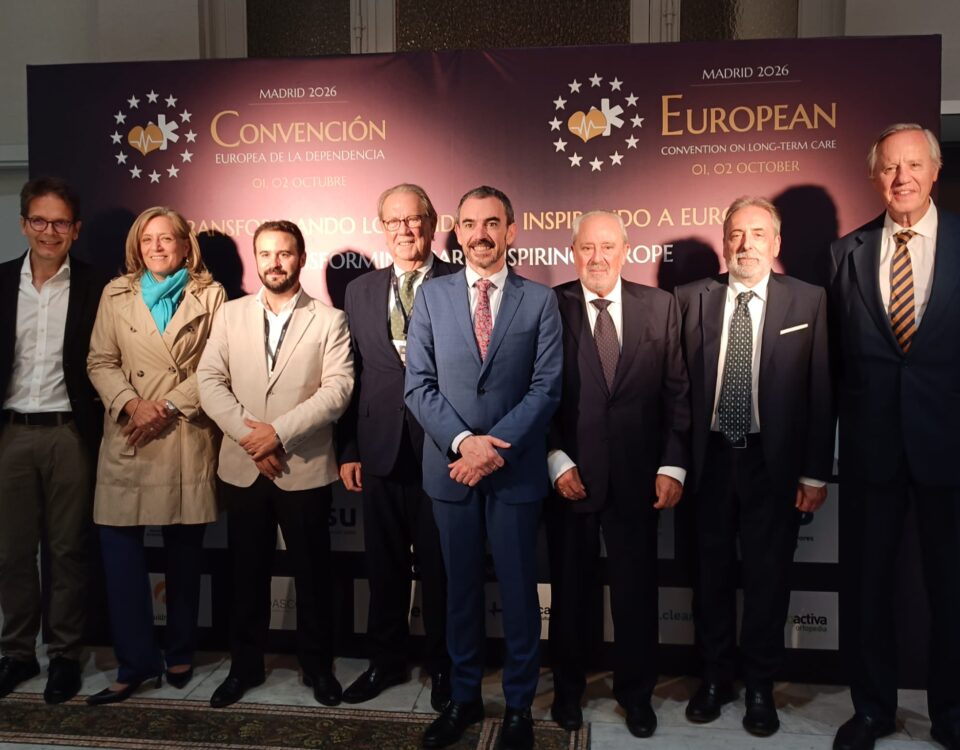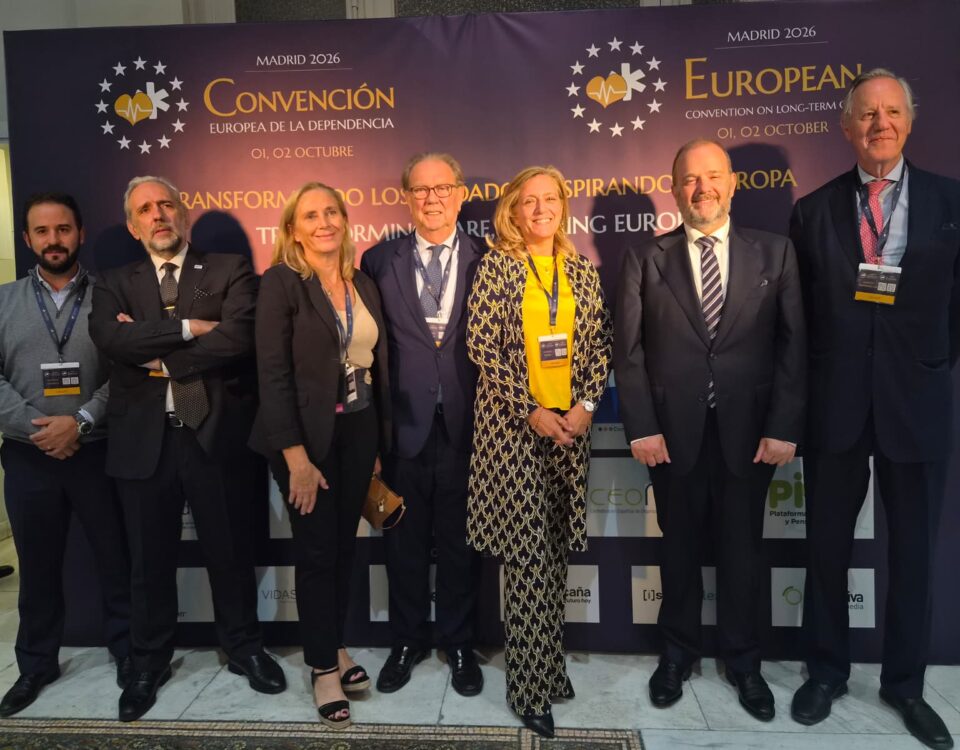


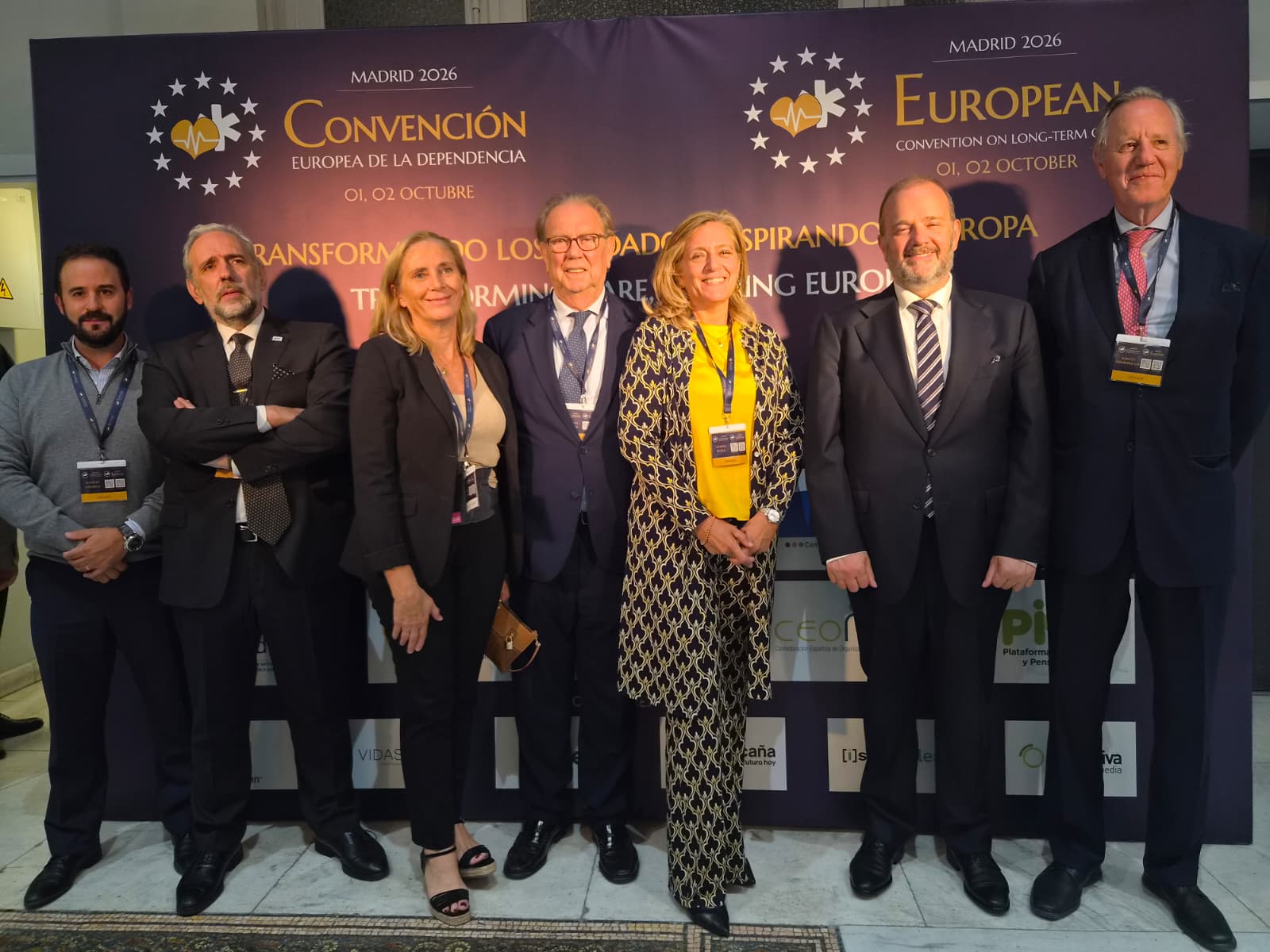
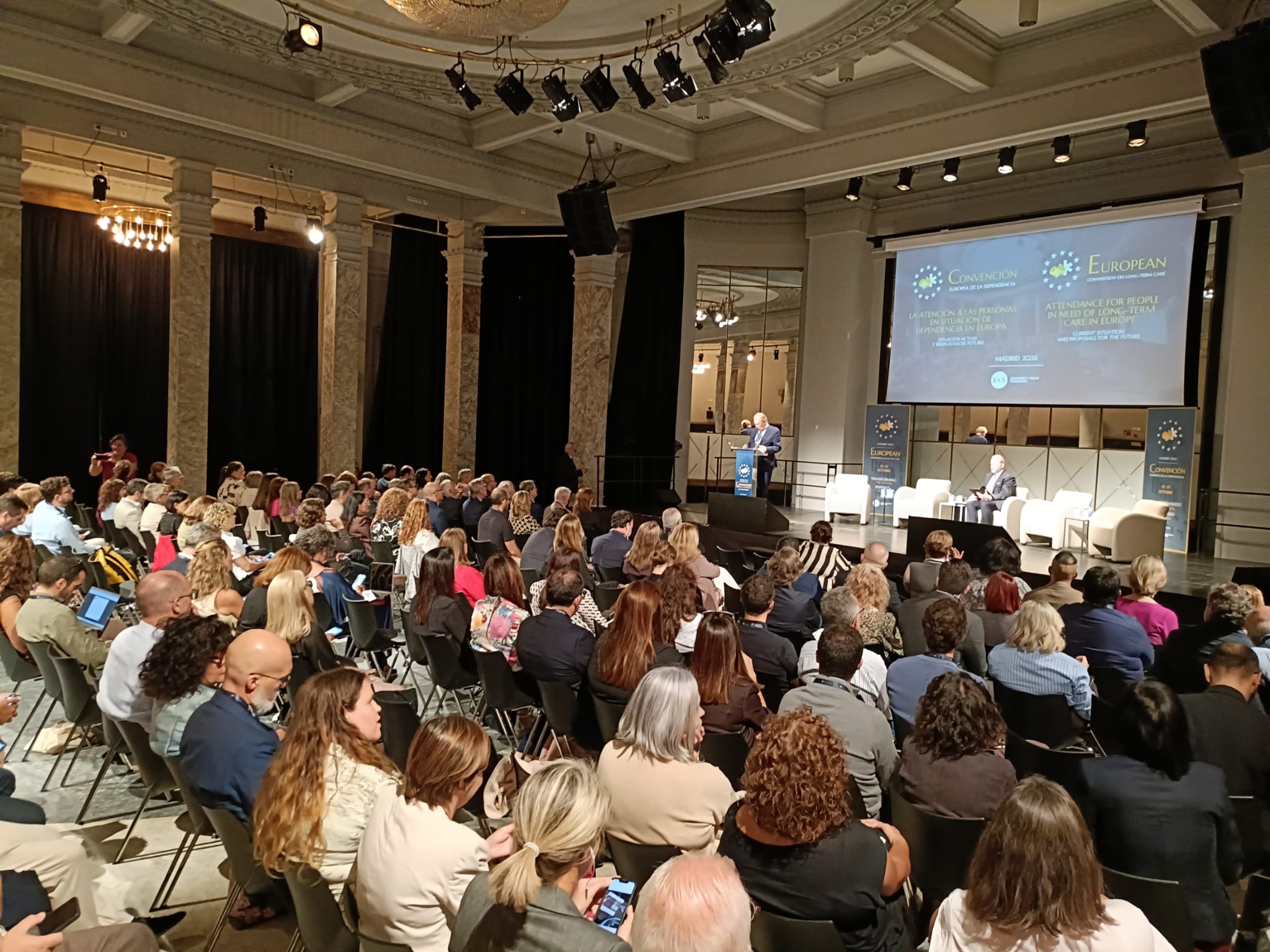
 02/10/2026.- The 1st European Convention on Long-Term Care began today in Madrid, coinciding with International Day of Older Persons—a particularly meaningful date to draw attention to one of Europe’s greatest social, healthcare, and economic challenges: guaranteeing quality care for an increasingly aging population with growing long-term care needs.
Organized by the Economy and Health Foundation (Fundación Economía y Salud), the Convention brings together institutional representatives, experts, and professionals from various European countries to analyze the current state of long-term care, share successful practices, and advance concrete proposals for the future. The sessions will culminate in a consensus Conclusions Report that will be presented to the European Parliament and EU governments.
A key sector for the economy
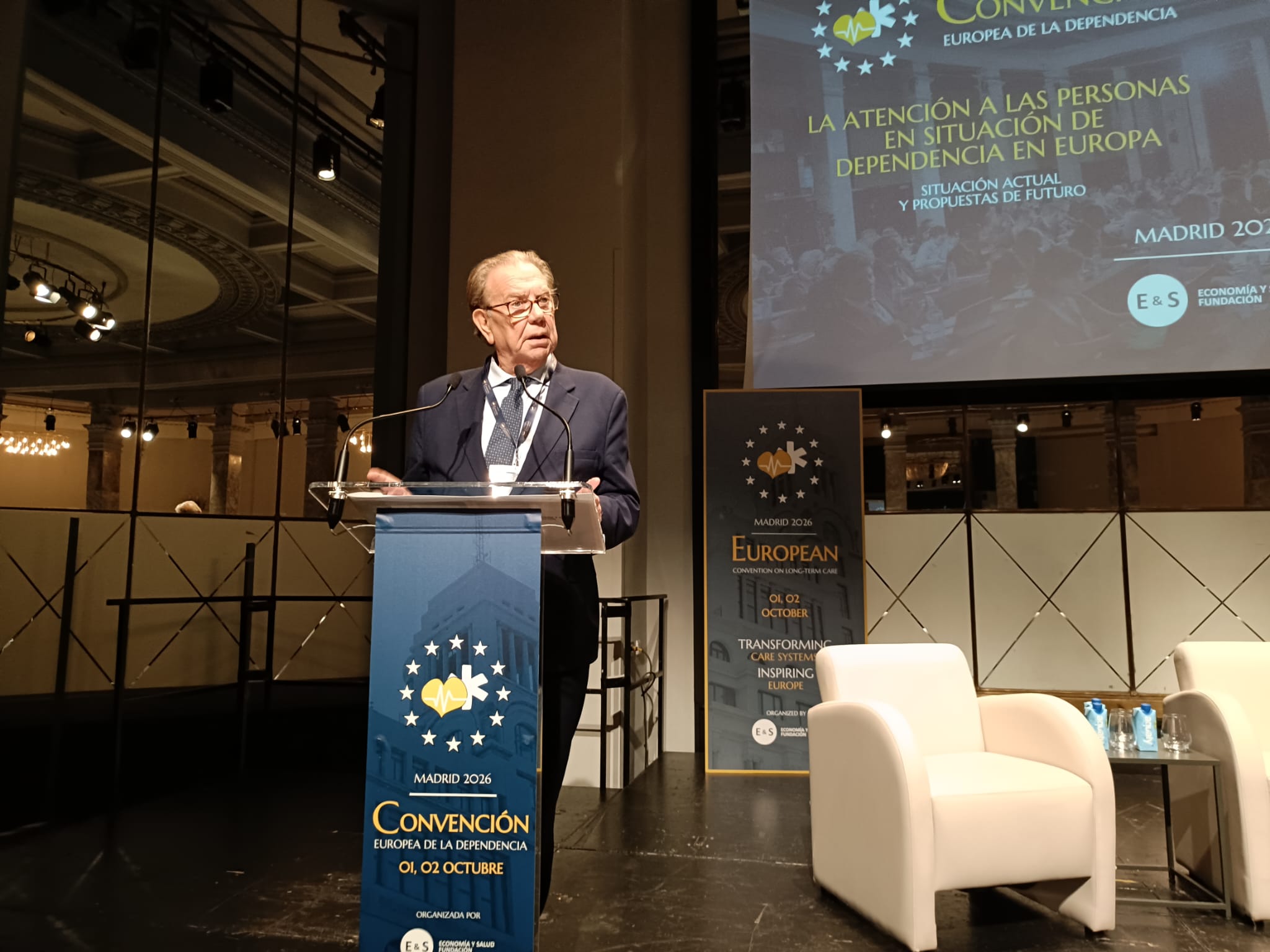
Alberto Giménez, President of the Economy and Health Foundation (Fundación Economía y Salud), opened the Convention by emphasizing the scale of the demographic challenge facing Europe. In his address, he noted that more than 27 million European citizens are currently over the age of 80, a figure that could exceed 50 million by 2050. By then, nearly 38 million people will require long-term care.
Giménez advocated for a shift in how dependency is addressed, urging that it no longer be viewed strictly through the lens of expenditure. «It is not only a moral duty,» he pointed out, but also «a sector capable of generating significant social and economic returns.» Dependency care requires strong infrastructure investments, drives intensive job creation, and can enhance overall system efficiency while cutting costs in other areas, such as healthcare.
The President of the Foundation also stressed a broad concept of health—understood not merely as the absence of illness, but as quality of life. From this perspective, he called for long-term care to be given high priority within European public policies.
Following his remarks, Nikolaos Isaris, Deputy Head of Representation of the European Commission in Spain, stated: «The care sector carries major economic weight. It is a strategic sector that drives employment and innovation while boosting local economies across all municipalities.»
He also highlighted that «traditional models have proven insufficient in the face of demographic shifts that demand a bold European response. Dependency care is an issue at the very heart of Brussels’ political agenda, as demonstrated by the launch and rollout of the European Care Strategy.»
Keynote address: The social value of care
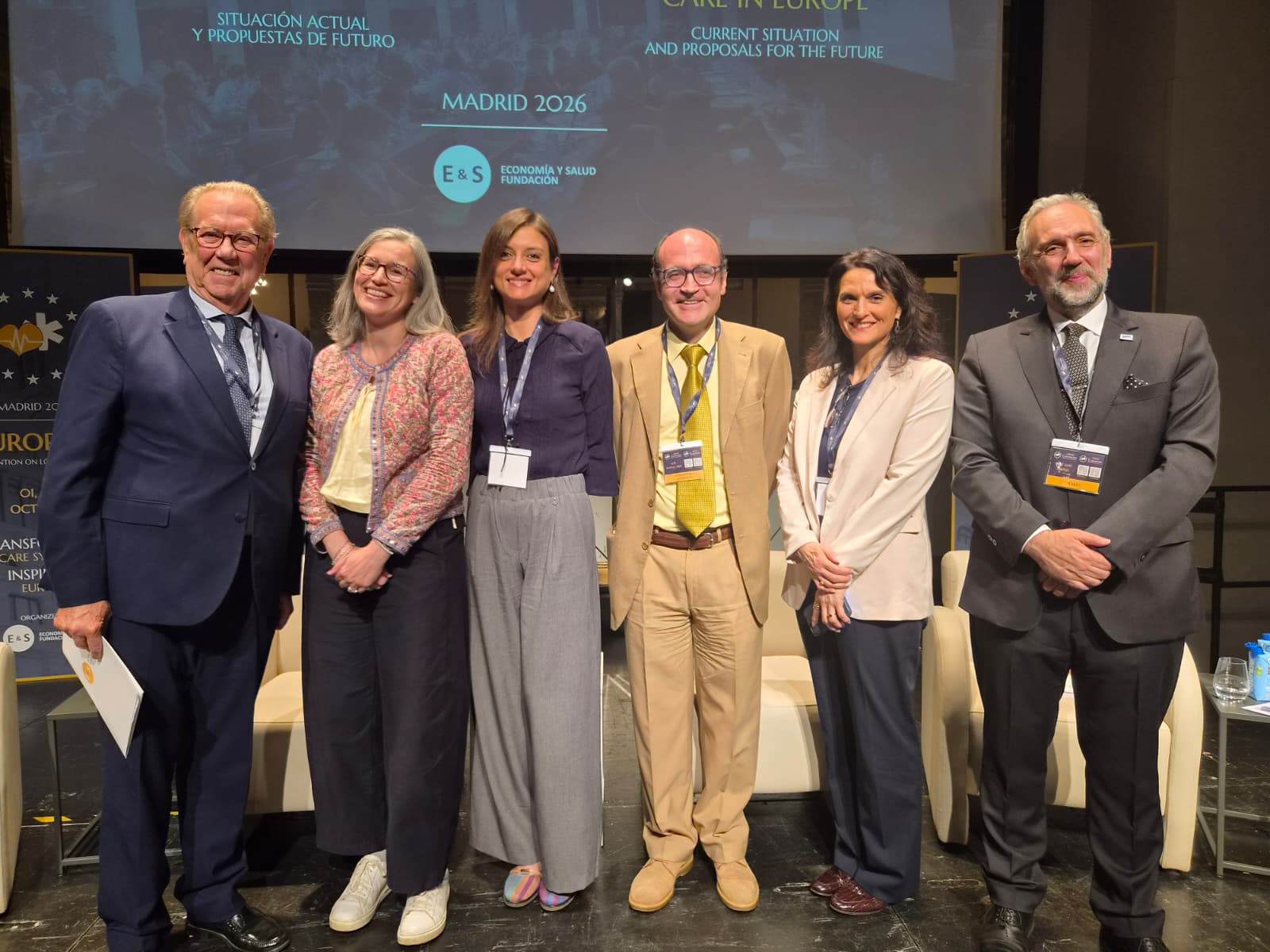
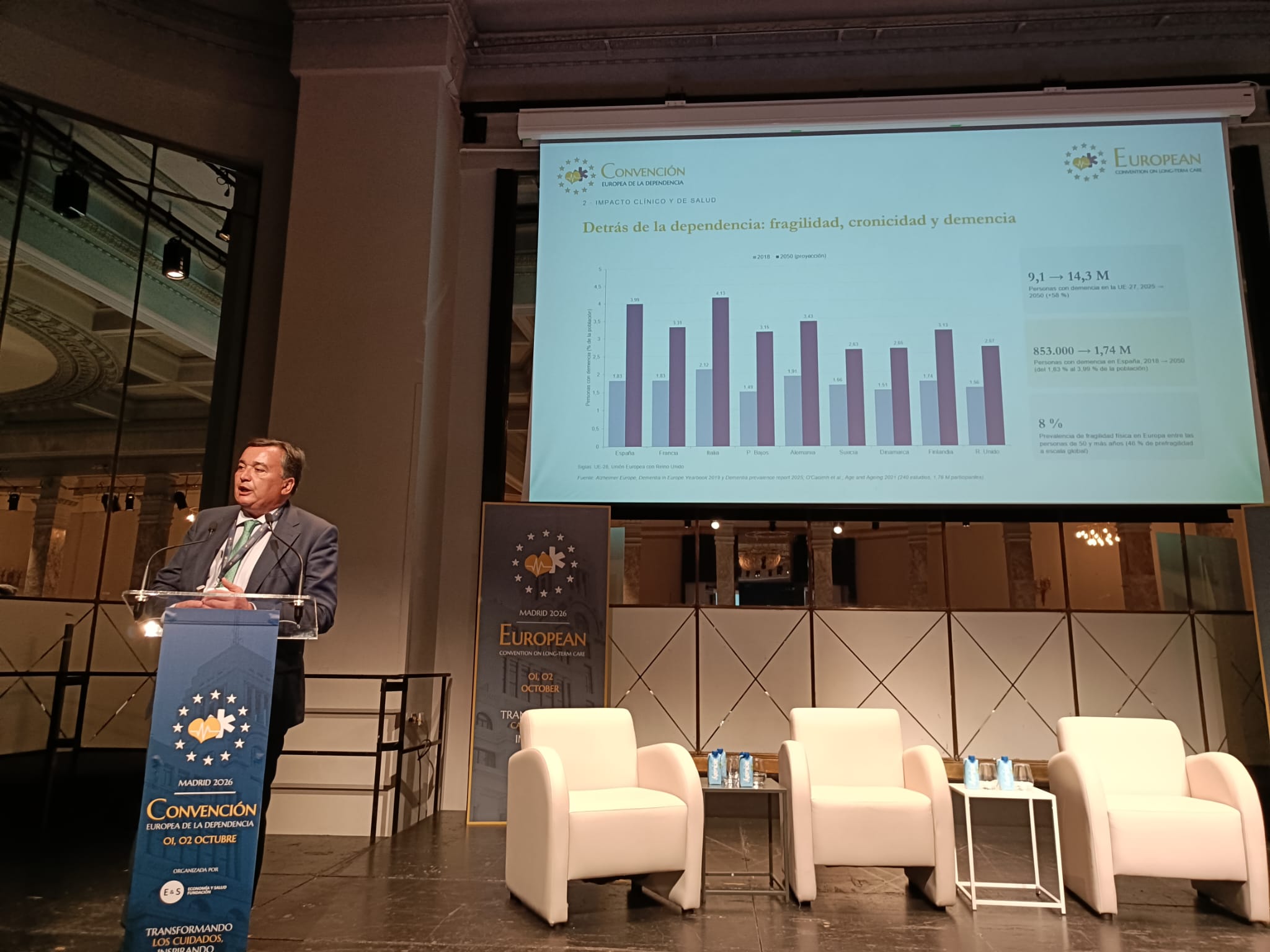
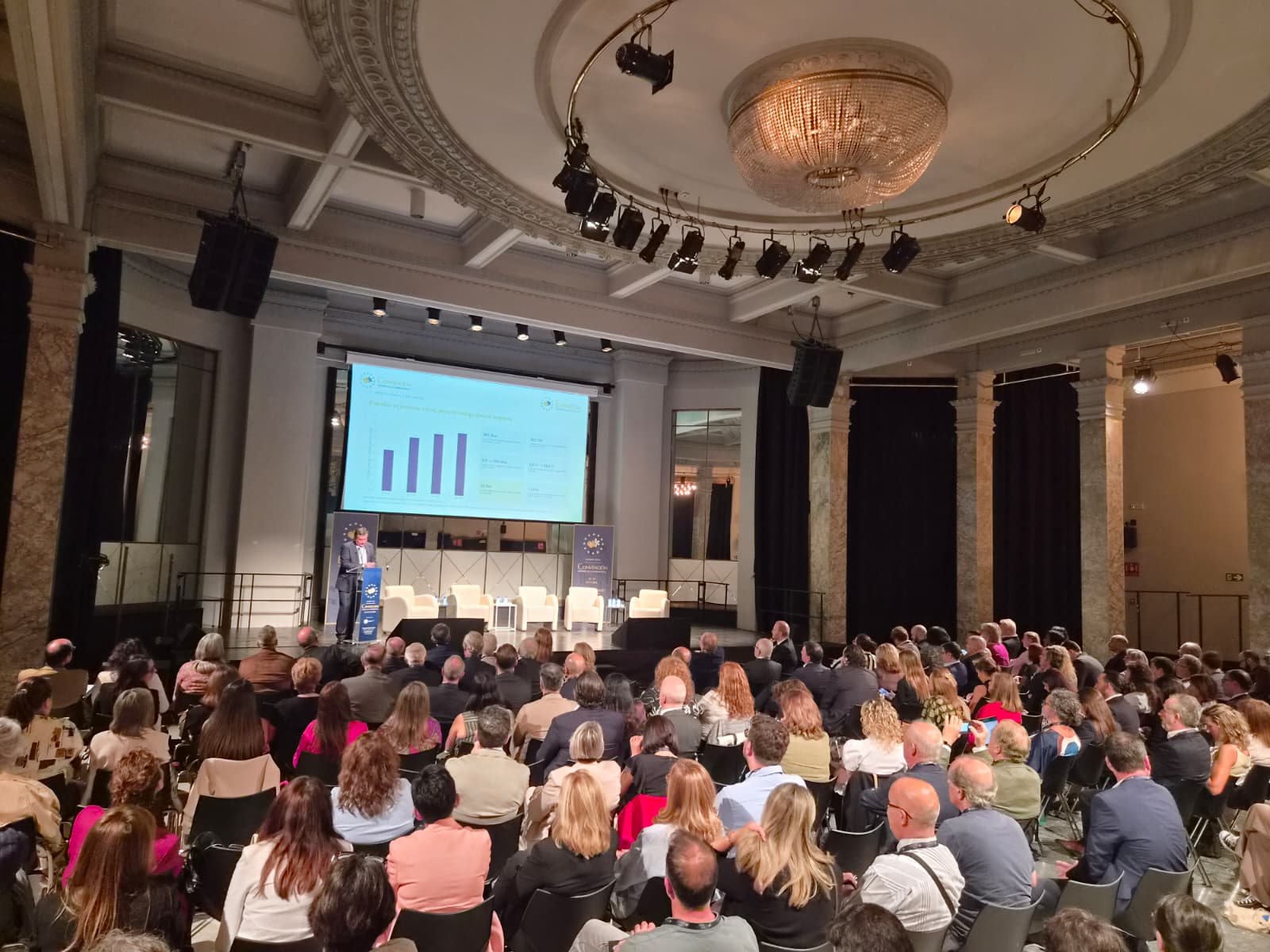
Following the opening remarks, Álvaro Hidalgo-Vega, President of the Weber Foundation and Professor of Foundations of Economic Analysis at the University of Castilla-La Mancha, delivered the keynote address, which focused on the social value of long-term care.
Hidalgo argued that long-term care generates value across multiple dimensions: it improves health and autonomy, reduces inequalities, relieves families of care burdens, creates employment and economic activity, and can prevent healthcare costs and unnecessary institutionalization. In the European Union, people over the age of 65 will grow from 22% of the population in 2025 to 29% in 2050, while the number of people potentially needing care will rise to 38.1 million. In Spain, the dependent older adult population could grow by 82% between 2022 and 2050, reaching 2.4 million people.
During his speech, he underscored the significant impact of the 52 million informal caregivers in Europe (whose value is equivalent to 2.4%–2.7% of European GDP). From an economic perspective, he highlighted that in Spain, every public euro invested yields a return of €0.39 to €0.49 to public coffers, generating around 40 direct jobs per million euros of public spending under the System for Autonomy and Care for Dependency (SAAD), along with a multiplier effect of €1.6 in GDP for every euro allocated to the sector.
Hidalgo concluded by proposing five major directives for European institutions: create a common dashboard to measure the social value of care, place prevention at the center, advance financial convergence, promote a European Caregiver Statute, and establish integrated community-based care as the system standard.
Sustainability, prevention, and protection for informal caregivers
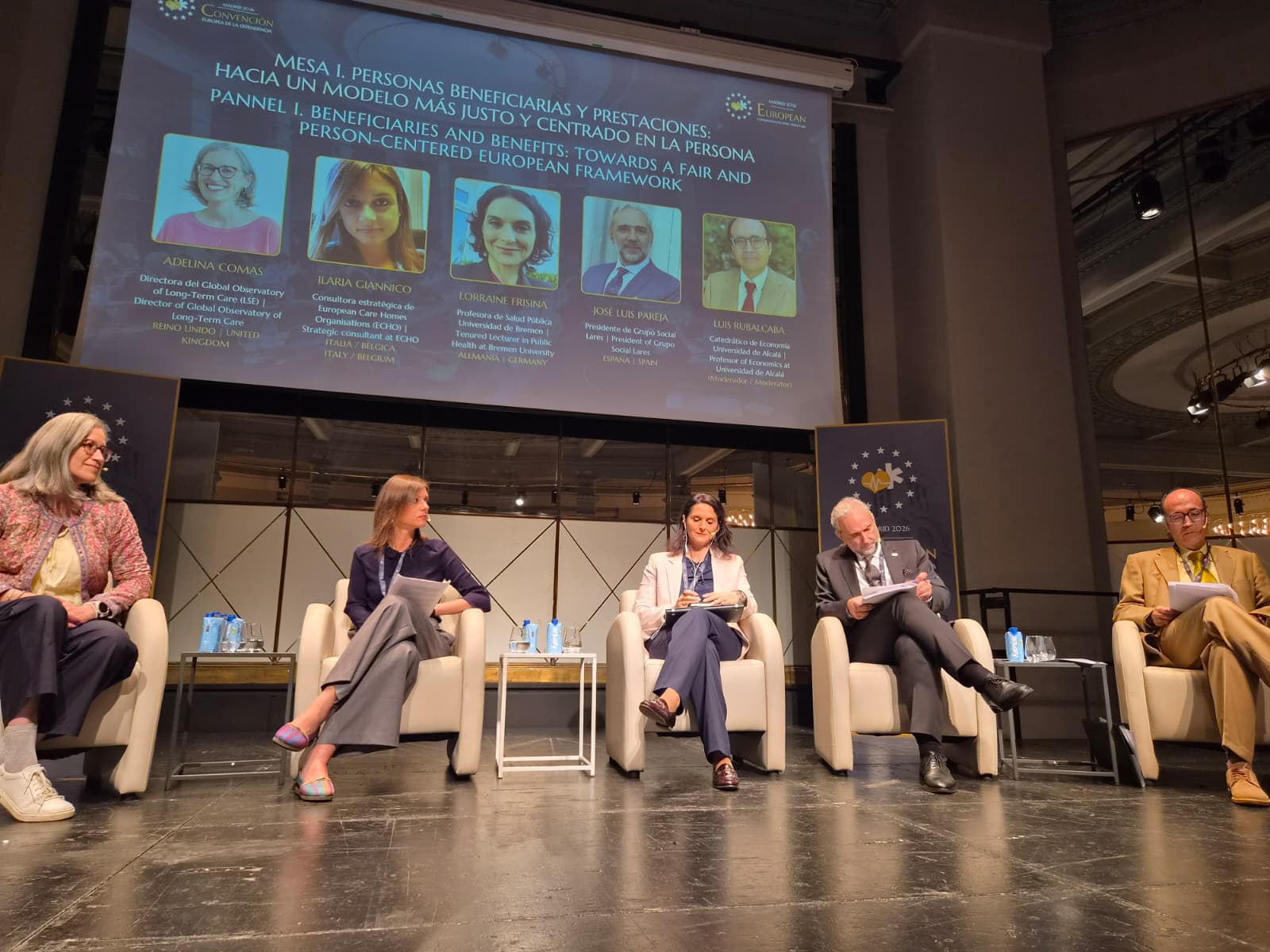
Adelina Comas-Herrera, from the Global Observatory of Long-Term Care at The London School of Economics and Political Science, argued that improving care systems requires expanding and balancing public coverage—not only in terms of who gets access, but also regarding which services are provided and what portion of the cost the system covers.
Among the key recommendations in her presentation, she emphasized the need to strengthen support for family caregivers, improve working conditions for professionals, promote training and professionalization across the sector, and expand community-based, preventive, and rehabilitation services. She also noted that countries must move toward systems capable of continuously adapting to emerging needs, avoiding a reliance solely on major, periodic legislative reforms.
Workforce shortages and European-level solutions
Ilaria Giannico, Strategic Consultant at the European Confederation of Care Homes Organisations (ECHO), warned of a staffing crisis in a sector that currently employs 3.1 million workers in the EU (87% of whom are women), against the backdrop of European Commission projections indicating 38.1 million dependent individuals by 2050. Giannico proposed four urgent measures:
-
The creation of a European Fund for the Attraction of LTC Professionals integrated into the ESF+.
-
The «Care-Skills» program for the rapid reskilling of unemployed individuals.
-
International partnerships to ensure ethical recruitment.
-
A «continuum of care» that combines home care, telemedicine, and residential facilities, moving past binary choices.
Multidimensional assessment and streamlined care pathways
Dr. Lorraine Frisina, Professor of Public Health at the University of Bremen, presented the lessons learned from the German reform, highlighting the need to shift from an assessment model focused strictly on physical limitations to a multidimensional evaluation that systematically accounts for cognitive-behavioral aspects and mental health.
Frisina advocated for designing the access pathway toward dependency recognition as an end-to-end process rather than a mere scoring tool (Pathway Design), establishing local one-stop advisory and care centers (Pflegestützpunkte), and setting strict administrative efficiency controls on resolution timelines.
Alignment of the Spanish model with the European Care Strategy
At the national level, José Luis Pareja Rivas, President of LARES Social Group Spain, stated that Spain has a solid framework through the System for Autonomy and Care for Dependency (SAAD), but warned of significant regional disparities, summarizing the issue as: «a single law and 17 different regional models.»
Pareja noted that the system’s evolution must strengthen home care, personal autonomy, health and social care coordination, and freedom of choice, in line with the European Care Strategy. He also cautioned that this progress requires guaranteeing sufficient funding to balance quality with sustainability.
The sessions of the European Convention on Dependency will continue tomorrow, October 2, addressing technological innovations and management models for healthcare and social services.